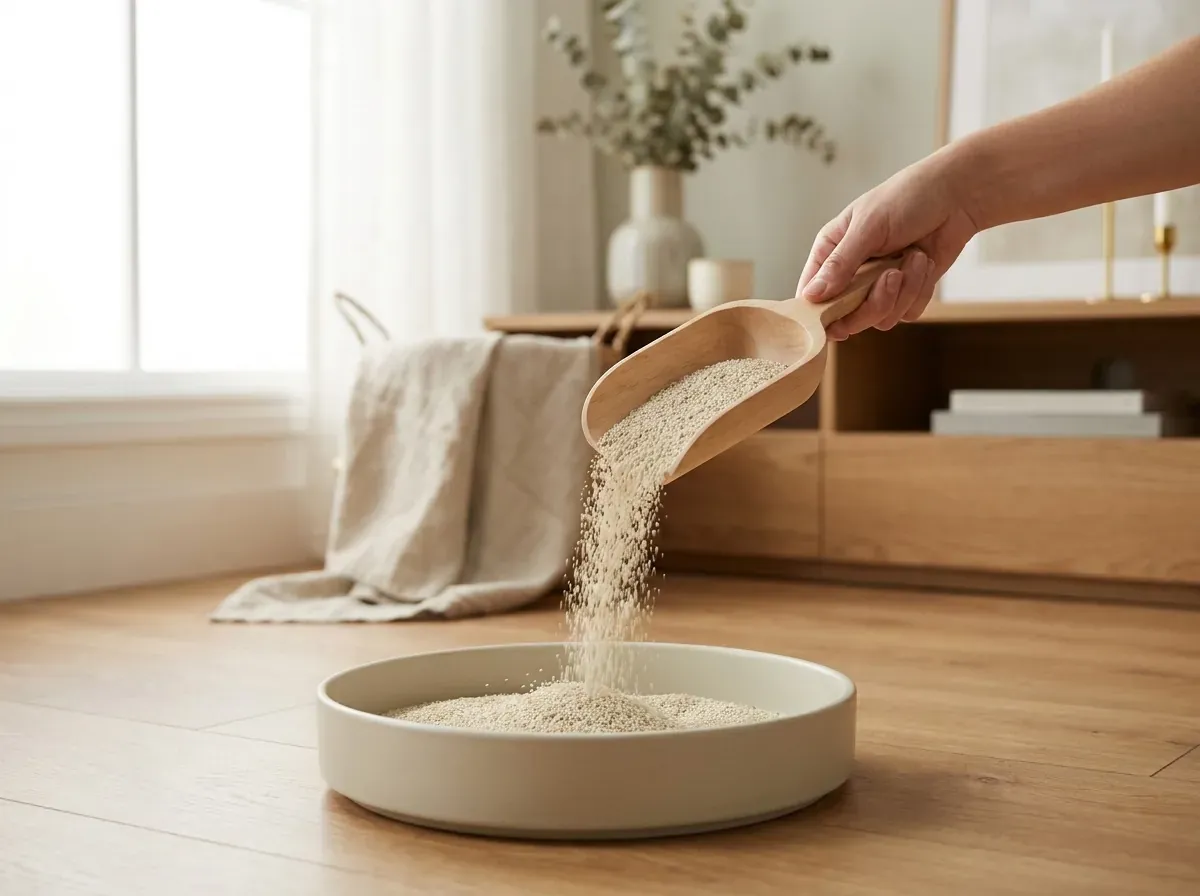
Well-processed clumping clay
Premium clay formulas often stay in the running because they pair low-dust processing with excellent clumping and familiar texture. That combination matters if the cat already prefers a classic fine-grain litter feel.
Compare low-dust cat litter in Canada with a stricter, evidence-based filter for particle control, cat acceptance, and real buying decisions.
Low-dust litter should reduce airborne particles during pouring and scooping, not just make a vague packaging claim.
Merck and Cornell guidance both support low-dust, unscented, fine-grain litter as a strong baseline for many cats.
Low-dust performance still has to coexist with clumping quality and cat acceptance.
Crystal, plant-based, and well-processed clay formulas can all fit this search intent, but each carries tradeoffs.
A low-dust litter should create less airborne material during the exact moments owners notice it most: when the bag is poured, when clumps are scooped, and when dry granules are disturbed during box use.
OSHA’s crystalline silica overview is not cat-specific guidance, but it is still a useful reminder that airborne dust deserves caution rather than casual dismissal. OSHA overview
For many households, the best low-dust option is also unscented and fine grained, which is why this page overlaps heavily with our sensitive-cat guide. If easier pouring and carrying are part of the same problem, continue with the lightweight guide.
Premium clay formulas often stay in the running because they pair low-dust processing with excellent clumping and familiar texture. That combination matters if the cat already prefers a classic fine-grain litter feel.
Wood, corn, or wheat-based options can work well when they are processed to avoid a powdery pour. They also tend to appeal to shoppers who want a softer feel under paw. If wood or pine is the specific material on your shortlist, compare the texture and cleanup tradeoffs in the wood-litter guide.
Crystal litters can be low dust in handling, but they are not automatically the best answer. Some cats dislike the sharper texture, which is why low dust has to be judged together with litter-box acceptance. Compare those tradeoffs in the crystal-litter guide.
If odor and dust are both concerns, a clean-handling carbon or biochar blend can narrow the tradeoff. See our odor-control page for that side of the decision.
Watch whether a visible cloud forms when the litter first enters a clean box.
Check whether clumps stay intact or collapse into dusty fragments during routine cleaning.
Look at the floor around the box after a day of use; tracked fines still affect the room.
Make sure the cat keeps using the litter comfortably before deciding the dust question is solved.
If you are changing formulas to reduce dust, transition gradually rather than replacing the box contents all at once. Use the step-by-step switching guide if your cat is sensitive to change.
Look for a formula that pours and scoops cleanly, uses an unscented or low-fragrance profile, and still forms strong enough clumps to remove wet waste quickly. Packaging claims matter less than how the litter behaves in the box.
Not automatically. “Low dust” is helpful, but you still need to look at the full formula, fragrance level, and whether the cat accepts the texture. A litter can be low dust and still be a poor fit for a sensitive cat.
Some crystal litters pour with very little dust, but texture acceptance varies by cat. Low dust is not enough on its own if the cat dislikes the feel or avoids the box.
Use the full guide if you need to balance dust reduction with clumping, odor control, cost, and multi-cat performance.