Granules that stay manageable at the box edge
Tracking control usually starts with how easily litter sticks to paws or gets kicked beyond the box perimeter during normal digging and exit.
Compare low-tracking cat litter in Canada by prioritizing cleaner granule behavior, low dust, clump strength, and smarter box setup before you buy.
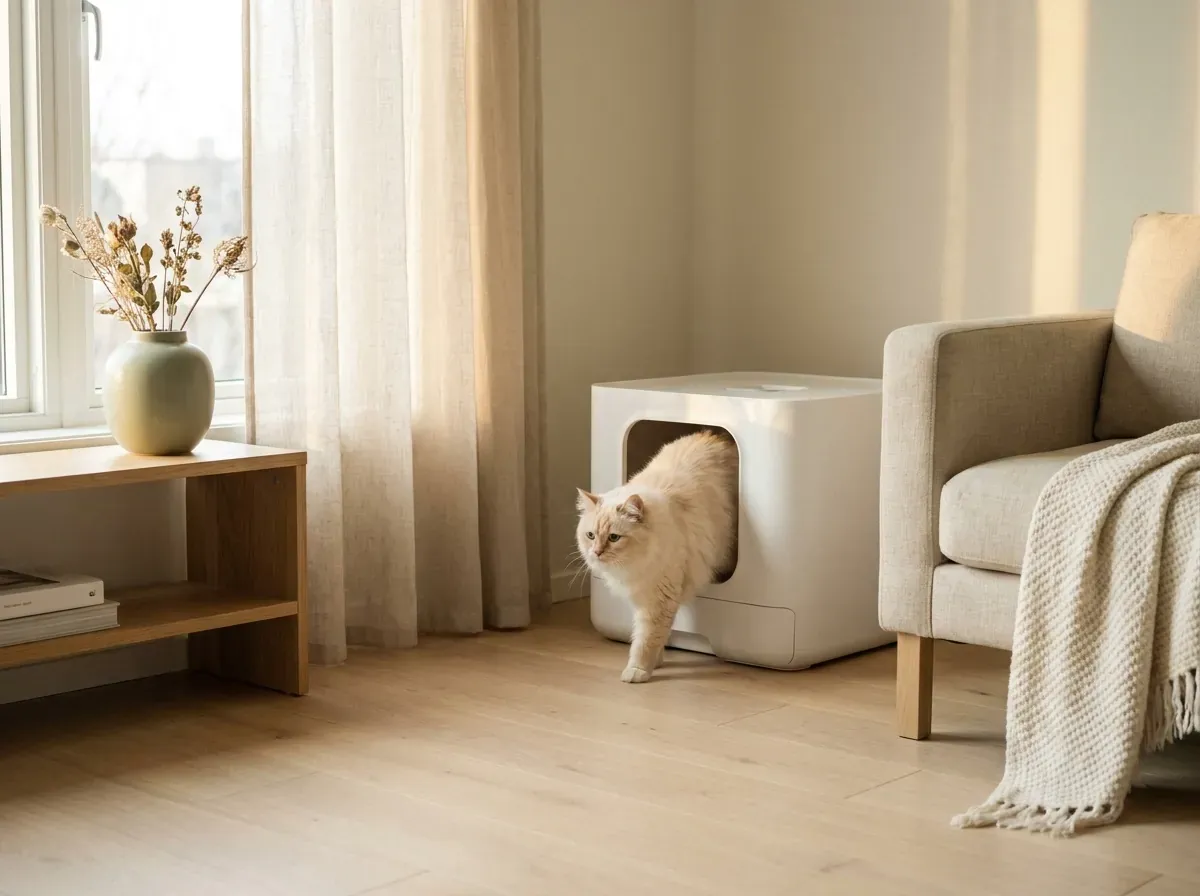
Tracking control is not just a litter claim. It depends on granule behavior, dust, clump residue, and how the box is set up.
Low dust and low tracking overlap, but they are not the same decision. A litter can pour cleanly and still spread too far outside the box.
Cornell and Merck litter-box guidance still matters here because clean boxes, proper depth, and accessible placement influence how well any formula performs.
The best low-tracking choice usually reduces cleanup burden without creating a texture or transition problem for the cat.
People usually search for low-tracking litter when they are tired of finding granules on hard floors, rugs, or nearby furniture. That frustration is real, but the fix is rarely as simple as buying the first bag that promises less tracking on the label.
In practice, tracking is shaped by granule size, dust level, clump residue, litter depth, and how the cat exits the box. That is why the best low-tracking choice usually behaves cleanly in motion, not just in marketing copy.
Merck and Cornell do not publish a special low-tracking formula rule, but their basic litter-box guidance still matters: keep boxes clean, keep them usable, and avoid setup choices that make normal box use harder. Merck / Cornell
Tracking control usually starts with how easily litter sticks to paws or gets kicked beyond the box perimeter during normal digging and exit.
Tracked dust still becomes cleanup work. A formula that leaves fewer fines on the floor is often more useful than one that only advertises less airborne dust.
Stronger scoop-out reduces the loose residue that often gets spread around the box after wet waste is removed.
A formula that tracks less but makes the cat hesitate around the box is not a clean win. The best low-tracking choice still has to work as litter first.
Once the box accumulates loose fines and broken clumps, more material escapes with every trip. Daily maintenance matters as much here as the formula label does.
OSHA's silica overview is not product guidance, but it is a useful reminder that fine particles deserve scrutiny. Cleaner handling reduces both visible scatter and the finer mess that settles around the room. OSHA overview
If tracking is worst in a tight living area, pair this page with the apartment guide. If easier carrying is also part of the decision, compare with the lightweight guide. If tracked fines are the main issue, continue with the low-dust guide.
The strongest tracking-control profile usually combines lower dust, cleaner granule behavior, firm clumps, and a box setup that does not fling litter into the surrounding floor area.
Not always. Larger or heavier granules can help in some homes, but tracking is also affected by dust, clump residue, box placement, and how much loose material sits near the cat's exit path.
Often yes. Entry style, mat placement, floor surface, and daily scooping all affect how much litter leaves the box, so formula choice and setup usually need to work together.
Written and reviewed by the Premium Cat Litter editorial team, and checked against the sources cited above. Read how we research and correct our work in oureditorial policy.
After you narrow the shortlist for cleaner floors, compare those formulas against odor control, comfort, cost, and restock confidence before you buy.